

Stepping into Bibi Lawrence’s workshop quiets the city – Lagos traffic becomes a distant murmur. Rolls of cloth fill the space, standing as silent testimony to countless ideas and experiments in fashion. Nigerian traditional designs – Isiagu, Uli, Oshuka, Agu – lie spread out, old as time, almost speaking. For ten years, Blessing Eleh, Founder and Creative Director of the African Fashion Brand, has worked to turn age-old tales into clothes showcased globally.
Her path from a small workshop in Lagos to Dallas Fashion Week 2025 was neither hurried nor accidental. Every collection she showcased was an intermission on identity and conservation, stating simply that traditional and modern luxury can coexist without compromise. What initially began as a personal exploration of Nigerian tradition has now evolved into a globally renowned fashion brand, expressing its narratives through the use of diverse textures, styles, and tales.
“I see fashion as memory stitched into movement,” Eleh once remarked. “Every motif I use has lived before me, I’m just giving it new breath.”
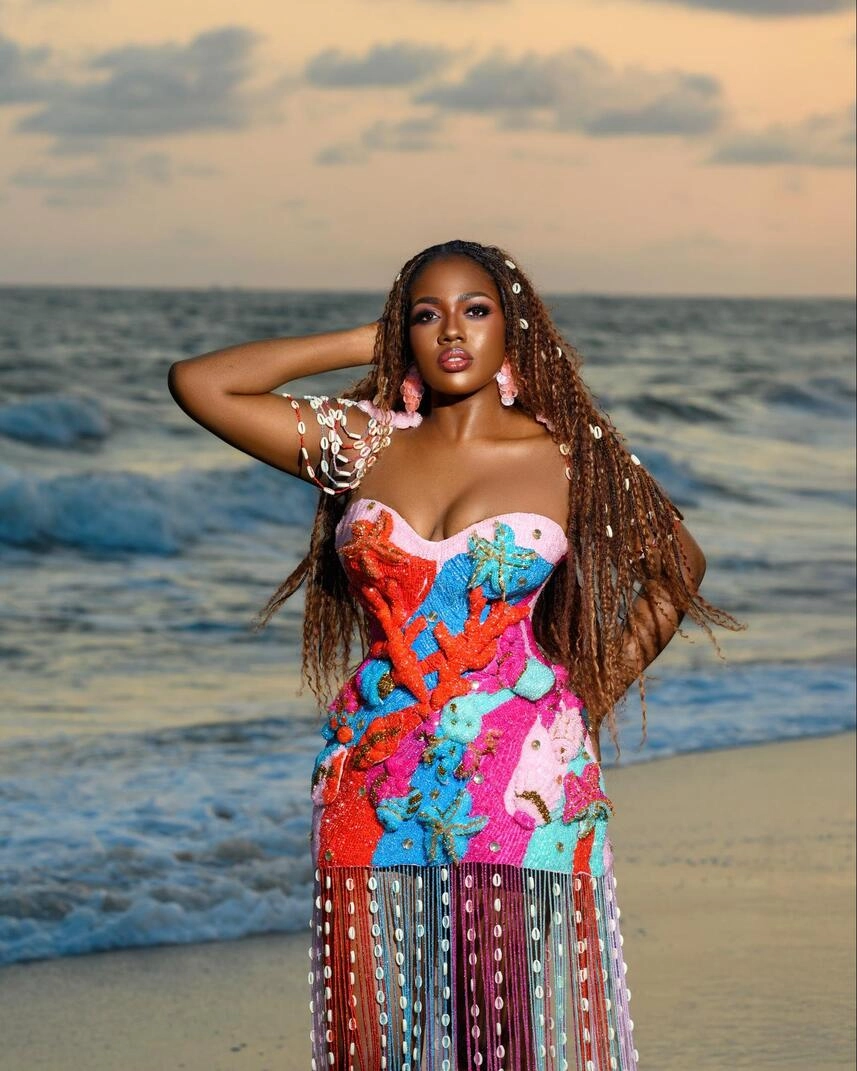
To understand Bibi Lawrence, one must read its textiles the way one might read poetry. The Isiagu motif, once reserved for Igbo royalty, appears in updated forms, velvet embossed with golden markings that catch the light like quiet thunder. The Uli patterns, historically drawn on women’s skin as symbols of protection and beauty, now trace the seams of flowing dresses. Eleh approaches these symbols with maximum scholarly respect, bringing back cultural expressions through the art of careful design rather than mere nostalgia.
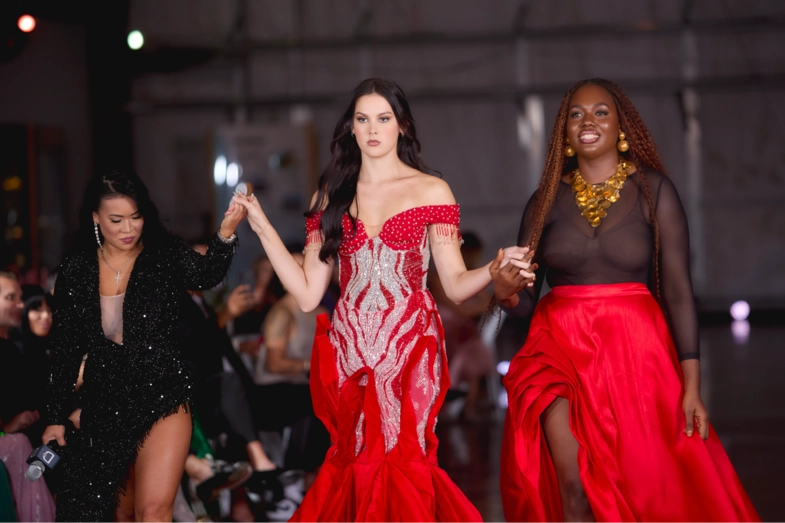
Designer Blessing Eleh (right) takes her finale walk at Dallas Fashion Week 2025 as a model showcases a look from Bibi Lawrence’s “Oge Ntoju” collection at the Frontiers of Flight Museum
Her silhouettes strike a balance between ceremony and restraint: fitted bodices paired with free-moving skirts, structured shoulders softened by hand-frayed raffia, and delicate embroidery offset by sculptural folds. Critics describe her work as “architectural storytelling,” garments that breathe between eras. Each collection carries an emotional rhythm, a sense that every thread knows its origin.
The artistry lies not only in the surface but in the concept that orchestrates behind it. Eleh organizes her lines around the teamwork with more than sixty local artisans across Nigeria, including dyers in Abia Akwete weavers, and Akwa ibom raffia weavers. The marks of their hands remain visible in every stitch, a testament to recognition and a refusal of anonymity.
Bibi Lawrence’s rise coincided with growing global awareness of ethical production, yet Eleh’s principles were formed long before sustainability became a fashionable concept. She speaks of it as a responsibility rather than a trend. Every piece is produced in small runs under controlled conditions, with off-cuts repurposed into accessories or new design concepts. The packaging materials are biodegradable, and the raffia trimmings are sourced from local suppliers. Although these decisions are distinct, they maintain traditional skills while also reducing waste, which is an indirect conversation between art and responsibility.
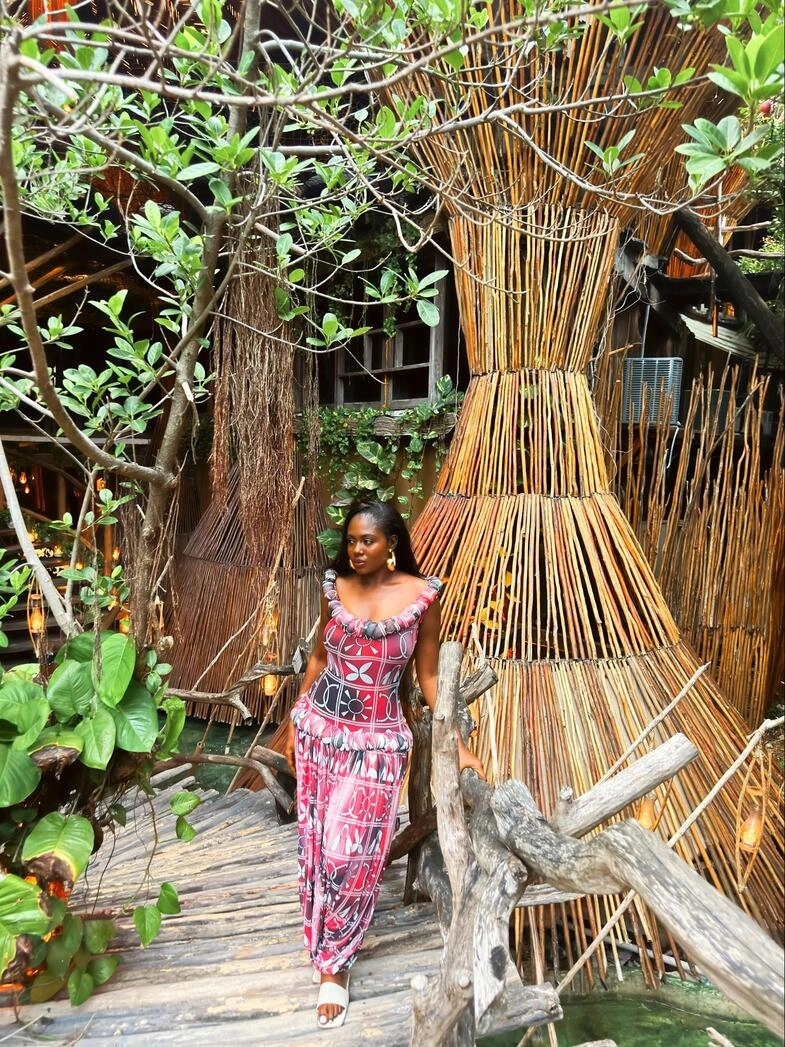
Her Lagos atelier now serves as both a studio and a quiet tribute to her years of mentorship. Once a lecturer at Yaba College of Technology, Eleh guided young designers in pattern interpretation and the art of restraint, encouraging them to see heritage as a living material. Today, her apprentices continue that spirit of learning around her cutting tables. “Our stories are written in cloth,” she often says. “To ignore them is to lose our vocabulary.”
That philosophy has earned her recognition beyond Nigeria’s borders. After Dallas Fashion Week, international buyers began approaching her label, drawn to the honesty of her craftsmanship and the calm authority of her presentation. Yet Eleh resists the idea of sudden success. The recognition of her brand resembles a blossom that unfolds, the constant and gradual rise of a brand that evokes a belief in authenticity over a display.
When Bibi Lawrence pieces appear in Western boutiques or on red carpets, they carry more than elegance. They signify cultural continuity through fashion diplomacy. The brand’s collections have been worn by Nigerian public figures and featured on Netflix’s Blood Sisters, but their deeper resonance lies in representing a generation of African designers who build legacies through technique rather than trend.
Each collection connects audiences across continents, woven through silk, raffia, and intention. Dallas Fashion Week’s Full Bloom collection embodied the spirit of the season, with floral fabrics playing a role similar to that of living sculptures, and Edo-style silhouettes presented in a contemporary way. The clothes exhibited a certain ethereal beauty, leaving the audience both stirred and contemplative.
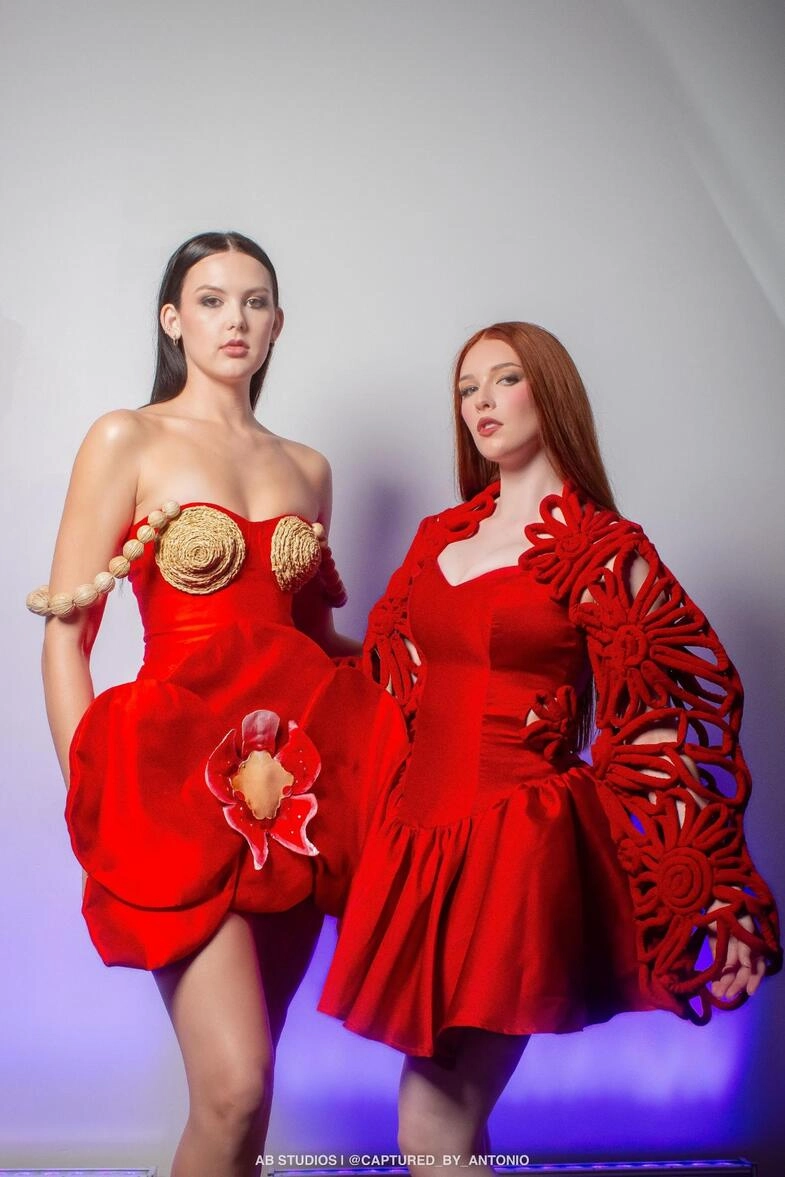
Although observers describe Eleh’s work as serene, they cannot deny that there is power in that stillness. Each piece does not rely on loud colors, chaotic layers, or dramatic theatrics to command attention. Her minimalism exudes excellence, and through her lens, couture becomes less about just a show and more about cultural stewardship, fashion as an archive, preservation, and a means of dialogue.
As her brand gains recognition across continents, Eleh remains anchored to the rhythms of home. In the stillness of her Lagos studio, she returns to the fundamentals: cut, fit, and fabric. The global acclaim, she says, matters less than what each piece communicates. “If a woman wears one of my dresses and feels connected to where she comes from, then my work has meaning,” she reflects.
In every stitch of Bibi Lawrence lies an act of remembrance, a reminder that heritage need not fade into the past. It can be worn, walked, and witnessed. From the hum of a Lagos atelier to the applause of international runways, Blessing Eleh continues to thread her story into the fabric of global couture, one deliberate seam at a time.